

Section Agreements Decoded: S38, S104, S278 – The Technical Documentation That Prevents Adoption Delays
According to PBC Today's reporting, thousands of UK homeowners face double-charges for road maintenance because essential infrastructure remains unadopted years after completion. Residents pay council tax expecting public services, but also pay private management companies because estate roads were never adopted by the highway authority. The financial burden is significant—£150-400 per household annually in some cases—but the frustration is worse. Residents believe they purchased completed homes in finished developments, only to discover infrastructure in regulatory limbo.
This problem stems from a single root cause: deficient technical documentation during the statutory approval process, or developers failing to complete adoption procedures before moving on to the next project. The statutory framework—Section 38, Section 104, and Section 278 agreements—provides a clear path to adoption, but only if technical requirements are satisfied comprehensively.
These three section agreements govern infrastructure adoption in England and Wales. Section 38 of the Highways Act 1980 covers adoption of new estate roads. Section 278 covers works within existing public highways. Section 104 of the Water Industry Act 1991 deals with sewer adoption. Each involves detailed technical approvals, construction supervision, and final certification. Get the documentation wrong, and adoption stalls—leaving infrastructure in private ownership with all the maintenance liability and resident dissatisfaction that entails.
Let's decode these three critical agreements, examining the technical documentation required and the process that prevents adoption delays.
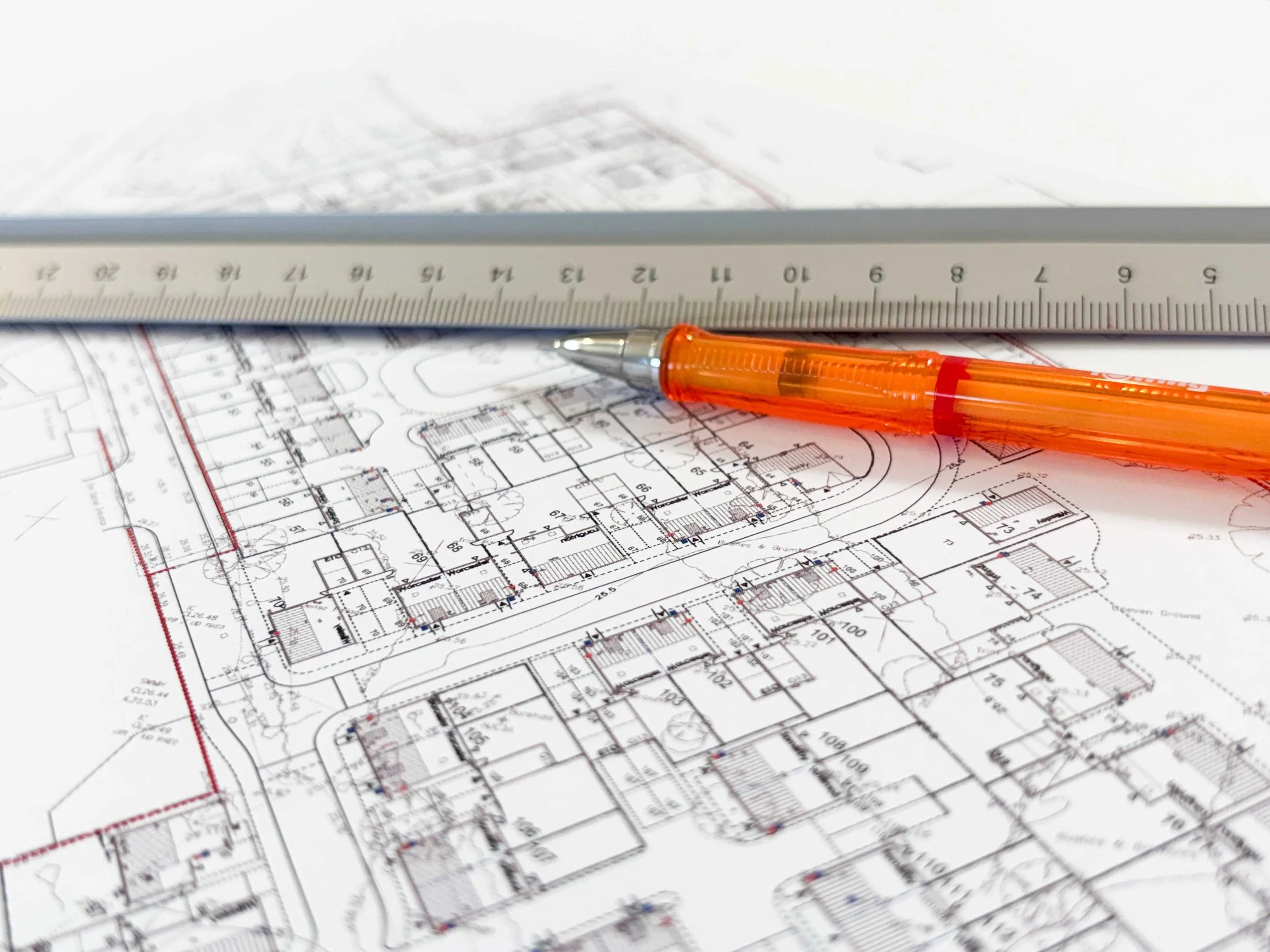
Understanding the Three Section Agreements
Before examining technical requirements, it's worth understanding why these agreements exist and what they achieve.
The Legal Framework
The Highways Act 1980 and Water Industry Act 1991 (legislation.gov.uk) establish the statutory basis for infrastructure adoption. These laws recognise that private individuals shouldn't bear the burden of maintaining roads and sewers serving multiple properties indefinitely.
This benefits everyone. Residents gain certainty that roads and sewers will be maintained competently in perpetuity. Local authorities gain control over infrastructure in their area. Developers achieve clean exit from projects without long-term maintenance liabilities or resident complaints.
But adoption isn't automatic—it's conditional on infrastructure being built to specified standards, supervised during construction, and properly certified on completion.
S38: New Highway Adoption
Section 38 of the Highways Act 1980 provides the mechanism for local highway authorities to adopt new roads constructed by developers. Once adopted, roads become "highway maintainable at public expense"—the authority's responsibility for resurfacing, drainage maintenance, street lighting, and winter gritting.
The process requires the developer and highway authority to enter into a Section 38 agreement before construction starts. This agreement sets out the technical standards the roads must meet, the approval and supervision process, and the financial bond (surety) the developer must provide. The bond value is set by the authority to cover their cost to complete the works if the developer defaults—methodologies vary, though bonds are often calculated in the range of 10-20% above estimated construction cost.
S278: Highway Works
Section 278 of the Highways Act 1980 governs works within the existing public highway. When development requires a new junction onto a public road, visibility improvements, traffic signals, or pedestrian facilities, these works occur within land already owned by the highway authority.
Section 278 agreements also establish who pays for what. The developer funds the construction and often pays commuted sums—lump-sum contributions toward long-term maintenance of enhanced features like upgraded street lighting, complex drainage systems, or premium surfacing materials.
S104: Sewer Adoption
Section 104 of the Water Industry Act 1991 provides the mechanism for water companies to adopt sewers serving multiple properties. Under the current Design and Construction Guidance (DCG), which forms part of the Sewerage Sector Guidance (SSG), sewers constructed to water company standards can be adopted, transferring maintenance responsibility to the company. (Note: this replaced the earlier Sewers for Adoption guidance in England from April 2020.)
According to an adoption overview by Woods Hardwick, successful adoption depends on three factors: technical design meeting adoptable standards, comprehensive documentation showing what was approved and built, and systematic supervision and certification during construction.
S38 Highway Adoption: Technical Drawing Requirements
Section 38 agreements require extensive technical drawing packages that define precisely what is being constructed and to what standard.
Mandatory Drawing Package
The technical submission for Section 38 typically includes:
General layout plan (1:500 scale) showing the entire estate road network, including road alignment, junction geometry, kerb lines, footway positions, verge widths, and visibility splays.
Longitudinal sections showing road gradients, drainage falls, and vertical alignment. These demonstrate that gradients meet adoptable standards (typically maximum 1:12 or 8.3% for residential streets).
Cross-sections at regular intervals showing pavement construction depths, materials specifications, drainage arrangements, verge details, and boundary treatments.
Street lighting layout showing column positions, light type and mounting height, cabling routes, and electrical supply connections.
Highway drainage layout showing surface water gullies, drainage pipes with gradients, connections to attenuation or outfall, and manhole positions.
Swept path analysis for service vehicles demonstrating that vehicles can navigate junctions, turning heads, and narrow sections without overrunning verges or footways.
Suffolk County Council's Road Adoption Guides and Nottingham City Council's Highway Agreement Guidance (Nottingham City Council) both provide detailed specifications of drawing requirements.
Colour-Coding Standards
Highway drawings commonly use colour-coding conventions, though specific requirements vary by authority. Many local highway authorities use the following (always verify your local authority's specific requirements):
Red indicates land to become highway
Blue shows visibility splays
Brown indicates drainage runs and connections
Green shows landscaping and verges
Yellow indicates street lighting columns
Incorrect or inconsistent colour-coding causes confusion and delays approval.
Technical Specifications
Highway construction drawings must show compliance with local authority design guides. Every highway authority publishes design standards covering carriageway widths (typically 5.5-6.0 metres for two-way residential streets), footway widths (typically 2.0 metres minimum), construction depths (generally 450-500mm total depth), surface materials, and kerb details.
The Bond & Surety
Section 38 agreements require financial bonds to guarantee completion. The bond value is calculated as the estimated construction cost plus 10-20% contingency. If the developer defaults, the highway authority can draw on the bond to complete works.
Common Rejection Reasons
Highway authority rejections typically stem from inadequate construction depths, missing or incorrect colour-coding, insufficient visibility splay evidence, and non-compliant junction geometry.
The Inspection Regime
Once technical approval is granted, construction proceeds under supervision. Highway authorities inspect at multiple stages: formation level, sub-base completion, base course completion, and final surfacing.
S278 Off-Site Highway Works: Technical Requirements
Section 278 covers works in the existing public highway—typically new junction creation, visibility improvements, or off-site mitigation required as a planning condition.
What Triggers S278
New developments affect existing highway networks by increasing traffic, creating new turning movements, or changing pedestrian patterns. Highway authorities assess these impacts and impose requirements to mitigate safety risks or capacity constraints.
Technical Drawing Requirements
Section 278 submissions require existing highway survey, proposed works layout, swept path analysis, visibility splay demonstrations, traffic management phasing plans, and reinstatement details.
The Approval Process
Section 278 follows a structured approval sequence taking 8-16 weeks, followed by bond calculation, construction inspection, Road Safety Audits (Stages 1-3), and certificate of completion.
Cost Implications
Section 278 works carry substantial costs: commuted sums for enhanced features, supervision fees (£150-500 per visit), safety audit fees (£2,000-8,000), and street lighting commuted sums (£10,000-15,000 per column for 25 years of maintenance).
For developments requiring significant off-site works, total costs including bonds and commuted sums can reach £320,000-350,000.
Programme Impact
Section 278 approvals take time. An 8-16 week approval period must be programmed before any works start. Construction itself may be phased to maintain traffic flow, extending duration.
Crucially, Section 278 completion is often a planning condition precedent—development cannot be occupied until off-site works are completed and certified.
S104 Sewer Adoption: Sewers for Adoption Standards
Section 104 agreements follow principles similar to Section 38, but apply to sewers. The Design and Construction Guidance (DCG), which replaced Sewers for Adoption in England from April 2020, provides the technical standards water companies require for adoption.
The Design and Construction Guidance Standards
The Design and Construction Guidance (DCG), which forms part of the Sewerage Sector Guidance (SSG) under Ofwat's Code for Adoption Agreements, replaced the earlier Sewers for Adoption in England from April 2020. Water companies use the DCG as their technical standard for adoptable sewers, providing comprehensive design and construction guidance covering foul sewers, surface water sewers, pumping stations, and ancillary infrastructure.
Technical Drawing Requirements
Section 104 submissions require sewer layout plans showing all foul and surface water runs, longitudinal sections demonstrating adequate gradients, manhole schedules and details, connection points to existing networks, pumping station details (if required), and surface water attenuation and SuDS.
Design Requirements
Sewers for Adoption specifies minimum 100mm diameter for foul sewers serving dwellings, and 150mm for surface water sewers. Minimum gradient varies by diameter: 1:80 for 100-150mm diameter foul sewers.
Manhole spacing is typically maximum 90 metres for 100-150mm sewers. Depth of cover must be adequate to prevent damage from traffic loading—typically 900mm minimum under highways.
The Approval & Vesting Process
Section 104 agreements are completed before construction starts. Construction proceeds with water company supervision—inspections verify pipe laying, bedding quality, and jointing. CCTV survey after completion provides visual evidence of internal condition.
Vesting certificate issuance occurs once all conditions are met. Unlike highways, there's typically no extended vesting period—once the certificate is issued, sewers transfer immediately to water company ownership.

Common Issues
Inadequate gradient causes flow problems—sewers that don't self-cleanse accumulate solids and block. Private drainage incorrectly shown as adoptable creates confusion. Missing attenuation calculations result in rejection. Non-compliant manhole details cause rework.
The Homeowner Impact
Unadopted sewers leave residents responsible for maintenance and repairs. Mortgage lenders increasingly scrutinise sewer adoption—unadopted sewers may reduce property values or affect mortgageability.
Coordination & Project Management
Most residential developments require all three agreements simultaneously, creating coordination challenges across different approval bodies, technical requirements, and timescales.
The Multi-Agreement Challenge
Section 38 and Section 104 agreements typically progress in parallel. Section 278 may be needed earlier because planning permission is conditional on securing off-site highway works approval.
Drawing coordination is critical. The highway layout affects drainage (gullies in carriageway, manholes in footways), which affects sewer design. Multiple consultants must produce drawings that spatially align.
Version control becomes essential. Without systematic version control, drawings diverge and inconsistencies appear.
When to Engage
Pre-application stage is the time for initial engagement with highway authorities and water companies. Detailed design stage is when formal Section 38/104/278 applications are prepared and submitted. Pre-commencement activities include finalising bond arrangements.
The Professional Team
Civil engineers design highway layouts and drainage networks. Technical specialists (like Sovatech) manage the preparation of drawing packages and coordinate between consultants. Project managers coordinate timescales and track approvals. Legal teams complete Section agreement documentation.
Critical Programme Milestones
Agreement completion before site start is non-negotiable. Inspection scheduling throughout construction requires coordination. Certificate requirements before property sales protect both developers and purchasers.
Cost Budgeting
Design fees typically amount to 3-6% of infrastructure works value. Bond costs at 10-20% contingency are holding costs that compound over time. Supervision fees are typically £150-500 per site visit. Commuted sums can be substantial—perhaps £200,000-300,000 for a 50-dwelling development.
The Risk of Deferral
Developers sometimes defer adoption completion, arguing that residents can manage infrastructure privately whilst adoption is progressed "later". This rarely works. Once the development is complete and sold, developer motivation evaporates.
Meanwhile, residents accumulate frustration. The developer's reputation suffers, and residents may pursue legal action.
The solution is completing adoption before final property sales. This requires discipline and maintaining focus on statutory approvals even during hectic construction and sales phases.
Protecting Residents and Reputation Through Complete Adoption
Section 38, 104, and 278 agreements exist to protect residents from bearing indefinite maintenance liability for essential infrastructure. These statutory mechanisms transfer responsibility to public authorities and regulated utilities, providing certainty and quality assurance.
For developers, complete adoption is reputational protection. Developments with unadopted infrastructure generate resident complaints, legal disputes, and negative publicity that affect future sales. The relatively modest additional cost of ensuring complete adoption—perhaps 2-4% of total infrastructure value—is excellent insurance against far larger reputational and legal risks.
The Sovatech Approach: Technical Drawing Coordination Across Statutory Agreements
At Sovatech Consulting, we coordinate technical drawing packages for Section 38, 104, and 278 agreements, working alongside civil engineers and drainage consultants to ensure submissions meet highway authority and water company standards. Our role is translating technical designs into regulatory-compliant drawing packages, coordinating between consultants to ensure consistency, managing version control as designs evolve, and liaising with approving authorities to address queries and secure approvals.
We understand that Section agreements are critical path for development programmes. Delays in statutory approvals directly impact site start dates, construction sequencing, and ultimately sales and cashflow. Our focus is eliminating preventable delays through high-quality technical submissions that achieve first-time approval.
The return on investment is straightforward: statutory approvals secured efficiently, construction proceeding without delays from deficient documentation, and infrastructure successfully adopted without legacy problems.
If your development requires Section 38, 104, or 278 agreements and you need technical drawing coordination to ensure comprehensive approvals and successful adoption, contact Sovatech Consulting. We'll work with your professional team to prepare regulatory-compliant documentation, coordinate between consultants, and support you through to complete infrastructure adoption—protecting residents and your reputation.
